Rummy is one of the most widely played card games in India, known for combining skill, memory, and decision-making. Among its many formats, the 13-card variant remains the standard version played both offline and online. Despite its popularity, many players still misunderstand key rules related to sequences, jokers, scoring, and declarations, which often leads to avoidable losses.
This guide explains Rummy 13 Card Rules in a clear, structured, and practical way. It is written for Indian players who want reliable information rather than promotional content. Beginners will learn the fundamentals, while experienced players will find clarity on advanced rule-related questions that frequently appear in Google search results.
The article also reflects how top-ranking pages present information, while filling common gaps such as gameplay flow clarity, safety considerations, and rule-based decision points. The goal is to help readers understand the game correctly, play responsibly, and make informed choices when playing online.
How to Play 13 Card Rummy Step by Step
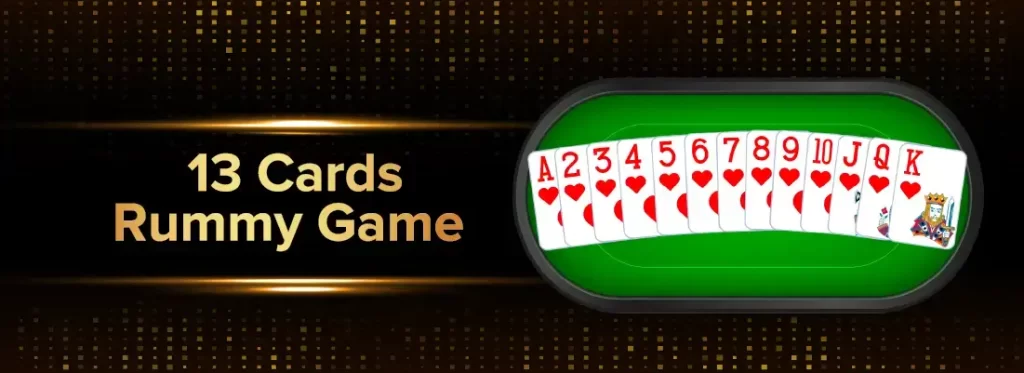
A standard game is played by two to six players using one or two decks of cards, including printed jokers. Each participant is dealt thirteen cards at the start of the game.
The objective is to arrange all cards into valid sequences and sets before making a declaration. A valid hand must contain at least one pure sequence, along with additional combinations.
Basic gameplay flow:
- Each player draws one card from the closed deck or the open discard pile.
- One card must be discarded after each draw.
- Players arrange cards into sequences and sets during their turns.
- When all conditions are met, a player makes a declaration.
- The hand is verified, and points are calculated.
This step-based structure is often missing from short rule pages, even though it helps new players understand turn-by-turn logic.
Indian Rummy 13 Card Rules and Format
The Indian format follows standardized rules recognized by most online platforms and card rooms. A game typically uses two decks when more than two players are involved, ensuring enough cards are available.
Key structural rules include:
- A minimum of two sequences is required.
- At least one sequence must be pure.
- Sets can only be formed after meeting sequence conditions.
- Face cards carry higher penalty points if left ungrouped.
Unlike some international rummy versions, Indian rummy emphasizes sequence creation over sets. This distinction is essential, especially for players switching between formats.
For an overview of how Indian rummy evolved as a skill-based game, reference material is available on Wikipedia.
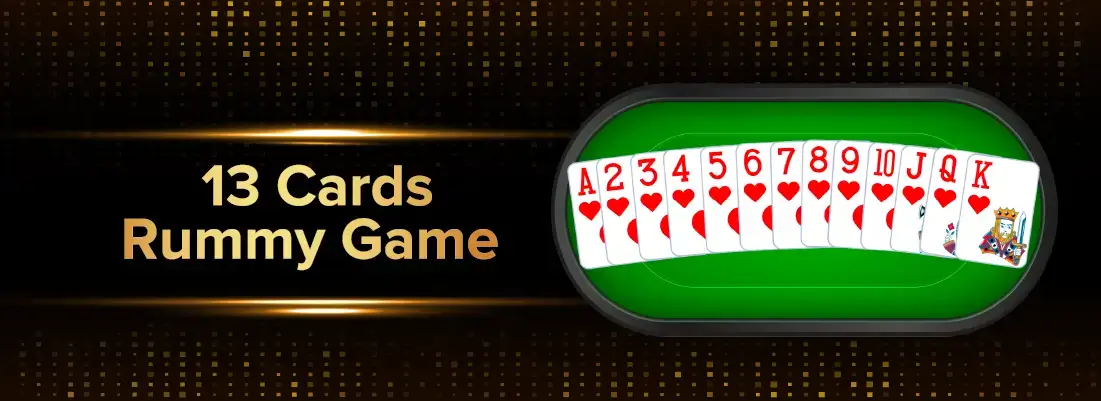
Can You Win Without a Pure Sequence in Rummy?
No. A pure sequence is mandatory for a valid declaration.
A pure sequence consists of three or more consecutive cards of the same suit without using any joker. Without it, a declaration is considered invalid, regardless of how well the remaining cards are grouped.
This rule is frequently misunderstood, particularly by players who rely heavily on jokers. Top-ranking pages often mention the rule but fail to explain its practical impact. In real gameplay, attempting to declare without a pure sequence results in a heavy penalty, even if all other combinations appear correct.
Understanding this condition early prevents costly mistakes and improves overall win consistency.
How to Count Points in 13 Card Rummy
Point calculation follows a fixed structure designed to penalize ungrouped cards. Each numbered card carries points equal to its face value, while face cards (Jack, Queen, King) are worth ten points each. Aces usually carry ten points unless used in a low sequence.
Key scoring principles:
- Cards in valid sequences and sets carry zero points.
- Unmatched cards add to the total penalty.
- A wrong declaration often results in a fixed maximum penalty, depending on the platform.
Many Google results focus only on point values but overlook how strategic dropping and early grouping reduce risk. This guide emphasizes understanding scoring as a defensive tool, not just an outcome.

When Can You Drop in 13 Card Rummy?
Dropping is a tactical option available to players who feel their hand is unlikely to improve. There are two main types of drops: first drop and middle drop.
A first drop occurs before picking any card and usually carries a lower penalty. A middle drop happens after one or more turns and results in a higher score deduction.
Dropping is particularly useful when:
- You are dealt multiple high-value cards.
- No immediate pure sequence is possible.
- The game format penalizes late declarations heavily.
This aspect is often underexplained in competitor content, despite being critical for point-based and pool rummy formats.
How to Use Printed Joker in 13 Card Rummy
Printed jokers act as substitutes and can replace any missing card in a sequence or set. However, they cannot be used to form a pure sequence.
Effective joker usage involves:
- Completing impure sequences quickly.
- Reducing high-point card exposure.
- Avoiding overdependence that delays declaration readiness.
Printed jokers differ from wild jokers, which are randomly selected cards at the start of the game. Understanding the difference helps players plan combinations more efficiently and avoid invalid hands.
For practical examples of joker use, many Indian platforms publish visual guides, such as those found on RummyCircle’s learning section.
Is Online 13 Card Rummy Safe in India?
Online rummy is considered legal in most Indian states because it is classified as a game of skill. However, safety depends largely on the platform used.
Trusted platforms follow:
- Secure payment protocols
- Fair play algorithms
- Transparent terms and conditions
Players should also be aware that certain states restrict real-money gameplay. Legal interpretations are supported by Supreme Court judgments, which clarify the skill-based nature of rummy. An overview of these rulings is available via government and legal analysis portals such as indiankanoon.
Choosing licensed platforms and understanding local regulations significantly reduces risk and enhances the overall experience.
Play Authentic 13 Card Rummy on hxsefly (For Indian Players)
PFor Indian players who want to apply official 13-card rummy rules in real gameplay, hxsefly offers rummy games designed around standard Indian rummy formats. The platform focuses on familiar rules, clear card arrangements, and gameplay structures that closely match how rummy is traditionally played across India.
hxsefly’s rummy games are suitable for players who already understand the basics and want hands-on practice. The game flow follows accepted Indian rummy mechanics, including mandatory pure sequences, correct joker usage, and transparent point calculation. This makes it easier for players to move from learning rules to applying them in actual game situations.
Indian users will also find the interface and gameplay pace aligned with local playing habits, helping reduce confusion often caused by modified or unclear rule systems. By offering rule-consistent rummy games, hxsefly allows players to build confidence and improve decision-making based on real scenarios rather than theory alone.
Players are advised to review local laws before participating and to play responsibly. hxsefly is intended for users who want a structured rummy experience that reflects commonly accepted Indian rummy rules.
Conclusion
Understanding rummy rules is not just about memorizing combinations. It involves recognizing when to play aggressively, when to minimize losses, and how to adapt based on the cards you receive.
By learning the correct structure, scoring logic, joker usage, and safety considerations, players can approach the game with confidence and responsibility. Accurate knowledge leads to better decisions, fewer penalties, and a more enjoyable experience.