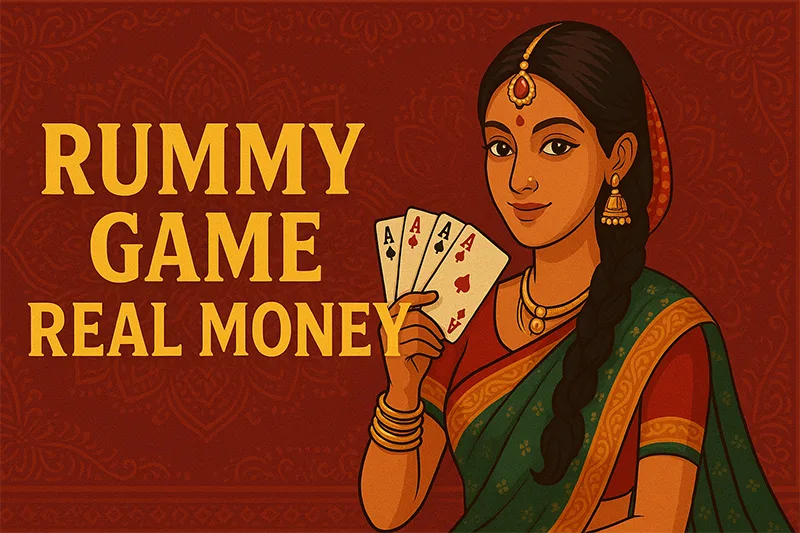
The digital landscape of card games in India has seen a massive shift toward Calling Rummy. While the basic rules remain rooted in traditional sequences and sets, the competitive environment in 2026 demands more than just knowing how to sort cards. Players are no longer satisfied with casual play; they seek professional edges, faster financial transactions, and mathematical certainty. This guide breaks down the mechanics of the game, legal nuances across Indian states, and the psychological warfare required to dominate high-stakes tables.
Mind Games: Force a “Wrong Drop” Like a Pro
Success in Calling Rummy is often decided in the mind before it is settled on the scoreboard. High-level players don’t just play their hand; they play the person sitting across from them. To force a “Wrong Drop” from your opponent, you must manipulate their perception of the discard pile.
Most intermediate players follow a predictable pattern: they discard high-value cards early. By holding a middle-value card (like a 7 or 8) slightly longer than usual, you create a “false safe zone.” When you finally drop it, an opponent waiting for a connected sequence often assumes the coast is clear, leading them to discard a card you actually need.
Another tactic is the “Bait and Switch.” If you need a 9 of Hearts to finish a sequence, try discarding a 10 of Hearts early. This signals to the table that you are not pursuing that specific suit, prompting opponents to release the very cards you are secretly hunting.
60-Second Cashouts: The Secret to Instant UPI Payouts
In the Indian gaming community, trust is built on the speed of the “Withdraw” button. In 2026, the standard for excellence is the Instant UPI Payout. Traditional methods that take 24 to 48 hours are no longer acceptable.
Leading platforms now use automated gateway settlements. When a player wins a tournament, the API triggers a request that hits the user’s linked VPA (Virtual Payment Address) in under 60 seconds. This transparency is crucial for the Federation of Indian Fantasy Sports (FIFS), which advocates for financial integrity in the sector. Always ensure your chosen app supports multi-gateway options to avoid bank server downtimes.
Bankroll Hack: Claiming the ₹100 Bonus + ₹581 Cashback
For the serious Indian player, managing capital is as vital as the game itself. Professional circles rarely start with their own deposited capital. Instead, they utilize structured incentive programs to build a “buffer” account.
The most efficient way to start is by utilizing the ₹100 welcome bonus. However, the real advantage lies in the ₹581 cashback layers. Unlike standard bonuses with impossible wagering requirements, the ₹581 structure is designed for “grinders”—players who participate in multiple rounds daily. By hitting specific milestone volumes, this cashback effectively reduces the platform fee (rake), turning a break-even session into a profitable one. This is exactly why many pros are moving their action to hxsefly.com, where the interface prioritizes these professional reward structures.

Risk Control: When to Call vs. When to Drop
The biggest leak in an average player’s game is the inability to “Drop.” In Calling Rummy, your goal is to minimize points when you cannot win.
- The First Drop: If you have no Joker and no pure sequence, a “First Drop” is the most profitable move. It costs minimal points and preserves your bankroll for a better deal.
- The Mid-Game Crisis: If you’ve reached the 5th pick without a pure sequence, calculate the “Point Gravity.” If your hand exceeds 60 points, a “Middle Drop” is safer than risking a full 80-point loss.
Professional play is about losing the least on your bad hands. This mathematical rigor is what the All India Gaming Federation (AIGF) emphasizes in its Skill Games Charter to ensure fair and disciplined play.
Legal Check: Is Your State in the “Green Zone”?
The legal status of real-money gaming in India is now governed by the Promotion and Regulation of Online Gaming Act (PROGA) 2025. While the Supreme Court defines Rummy as a “Game of Skill,” certain states have specific restrictions.
- Allowed States: Maharashtra, Delhi, Karnataka, and West Bengal are fully regulated and safe.
- Restricted States: Telangana, Andhra Pradesh, and Tamil Nadu have strict bans on pay-to-play formats.
- 2026 Outlook: The Ministry of Electronics and IT (MeitY) is standardizing these rules via the new Online Gaming Authority to protect players from offshore scams.
Conclusion
Dominating Calling Rummy in 2026 requires psychological prowess, financial discipline, and high-speed infrastructure. By leveraging the ₹581 cashback program and mastering the art of the “Middle Drop,” you position yourself in the top 1% of Indian players. The game is evolving—staying informed is your greatest asset. For those ready for a professional-grade experience, the doors are open to the next generation of Rummy.